Spider Plant Brown Tips: Causes and How to Fix Them
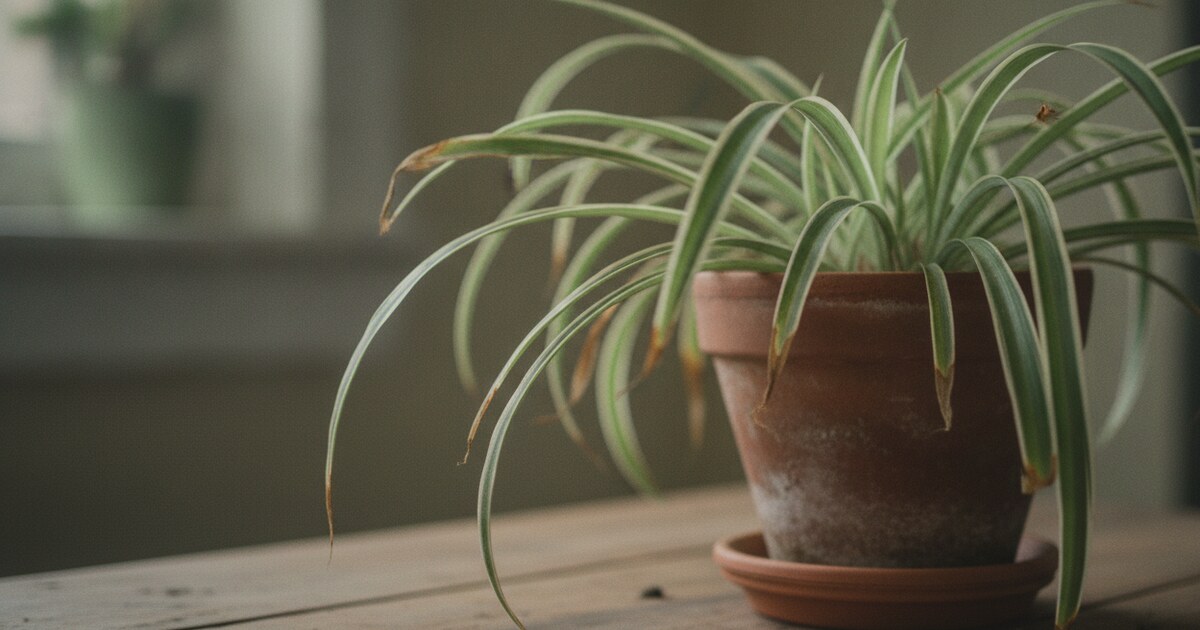
Spider plants (Chlorophytum comosum) are one of the easiest houseplants to grow. They survive dim corners, bounce back from missed waterings, and produce trailing babies like clockwork. But one problem they’re genuinely prone to: the tips of those long arching leaves turn brown and crispy.
If your spider plant is getting brown tips, you’re not alone. It’s one of the most common spider plant complaints, and it almost always traces back to one of six fixable causes. Spot the right one, make the change, and new growth stays clean and green.
Quick answer: Spider plant brown tips are most commonly caused by fluoride or chlorine in tap water, low humidity, or inconsistent watering. The tips turn brown and crispy while the rest of the leaf stays healthy when it’s a water-quality issue. Trim the brown tips with clean scissors, then address the root cause to stop new browning on fresh growth.
Why Spider Plants Get Brown Tips
Spider plants are more sensitive to a few environmental conditions than most houseplant guides acknowledge. Fluoride sensitivity is at the top. Chlorophytum comosum is one of the most fluoride-sensitive houseplants sold commercially, and most US tap water contains 0.7 milligrams per liter of fluoride (the CDC’s recommended fluoridation level). At that concentration, spider plants accumulate fluoride in leaf tissue over weeks until tip necrosis appears: a tan or brown band across the tip, sometimes with a narrow yellow border separating dead from living tissue. Each watering also deposits mineral salts from fertilizer in the potting mix, and over time the concentration climbs high enough to draw moisture out of root cells through osmosis. Low humidity adds a third layer of stress. Spider plants evolved in humid South African forests at 1,000 to 2,800 meters elevation, and dry indoor air forces them to lose water through leaf surfaces faster than the roots can replace it. Two or three of these stressors often pile on at once.
Water Quality: The Most Common Cause of Spider Plant Brown Tips
Fluoride toxicity is the top culprit in most households, and it’s invisible until the damage shows up on the leaves. Tap water treated with fluoride deposits a small amount of the mineral with every single watering. Spider plants are particularly vulnerable because of their shallow, dense root systems, which concentrate fluoride uptake over time.
The visual tell is a crispy, tan tip that ends at a clean line, with healthy green tissue continuing down the rest of the leaf. There’s no yellowing across the whole leaf, no wilting, no soft or mushy stems.
To fix it, switch to distilled water, filtered water, or collected rainwater. Let the potting mix dry out between waterings so fluoride doesn’t accumulate from constant moisture. Every 2 to 3 months, flush the soil by pouring a generous volume of water slowly through the pot and letting it drain completely. This leaches accumulated mineral salts out of the mix.
Chlorine is a secondary concern. Most municipal chlorine dissipates if you leave tap water sitting overnight in an open container. Fluoride doesn’t off-gas. Leaving water out overnight does nothing to fix fluoride toxicity.
Low Humidity and Inconsistent Watering
Spider plants want humidity between 40% and 60%. Most homes run somewhere between 30% and 50%, and that drops further in winter when heating systems dry the air. When indoor humidity falls below 35%, spider plants lose moisture through their leaf tips faster than roots can supply it, producing the same tan, crispy browning as fluoride damage.
You can raise humidity around the plant by placing it on a pebble tray filled with water (the pot rests on the pebbles above the water line, not sitting in it), by grouping it with other plants, or by running a small humidifier nearby. Bathrooms and kitchens naturally run 10 to 20 percentage points higher than living rooms and work well for humidity-loving houseplants.
Underwatering causes similar-looking brown tips, but the whole plant usually looks stressed too: curled or limp leaves, soil pulling away from the pot edges, a pot that feels very light when lifted. Check the top two inches of soil before every watering. Bone dry means it’s time to soak.
Overwatering causes a different kind of browning, typically starting at the base of the leaf rather than just the tip, and usually paired with yellowing and soft stems. If you’re not sure which direction you’re getting the watering wrong, the guide on overwatered vs underwatered plant covers the exact visual differences between the two conditions.
Too Much Light, Fertilizer, or Root Overcrowding
Direct afternoon sun scorches spider plant tips to a darker shade, almost black, rather than the tan color from fluoride or humidity stress. Spider plants do well within 5 feet of a south or west-facing window, but sitting directly on a sun-drenched windowsill, tips can burn within a few weeks. Moving the plant back from the glass or filtering light through a sheer curtain solves it quickly.
Over-fertilizing deposits the same kind of salt into the soil that fluoride-heavy water does. Spider plants need light feeding: a balanced fertilizer (10-10-10 or similar) at half-strength, once a month in spring and summer. Full-strength doses or year-round feeding pushes salt concentration high enough to brown the tips even when the watering routine is otherwise solid. Flush the soil every 2 to 3 months regardless of how often you fertilize.
Root-bound plants struggle to hold enough water or nutrients to keep leaf tips hydrated. If roots are circling the drainage holes or visibly pushing through the pot bottom, go up one container size with fresh, well-draining potting mix.
Similar tip-browning patterns show up in other popular houseplants for the same core reasons. Dracaena brown tips trace most often to the same fluoride and salt buildup that stresses spider plants, and the fix is identical: switch water sources and flush the soil regularly.
How to Trim Brown Tips and Stop New Browning
Once leaf tips go brown, they stay brown. The tissue is dead and won’t recover color. Trimming doesn’t fix the underlying problem, but it cleans up the plant’s appearance and removes dead material that can harbor fungal spores in humid conditions.
Use clean, sharp scissors. Cut at an angle that mimics the leaf’s natural taper, leaving a tiny sliver of brown at the very end so you’re cutting close to but not into live green tissue. Wipe blades with rubbing alcohol between plants if you’re trimming multiple pots.
After trimming, work through this checklist to stop new browning from forming:
- Switch to filtered or distilled water if you’re on fluoridated tap water
- Check soil moisture before every watering; water only when the top 2 inches are dry
- Move the plant out of direct afternoon sun
- Measure humidity with a cheap hygrometer; target 40% to 60%
- Flush the soil thoroughly every 2 to 3 months to clear mineral buildup
- Check if the plant is root bound; repot if roots are circling the drainage holes
Most spider plants respond within 4 to 6 weeks of consistent changes. The existing brown tips won’t disappear, but new growth coming in should stay clean and green all the way to the tip.
How PlantlyAI Can Help Narrow Down the Cause
Sometimes the checklist doesn’t make the answer obvious. You’ve switched to filtered water, humidity looks fine, and the watering schedule seems consistent, but the tips keep browning. A photo of the damaged leaves can reveal details that a general description can’t.
PlantlyAI lets you photograph your spider plant and get an AI diagnosis of the most likely cause. The app covers fluoride toxicity, humidity stress, root rot, sun scorch, and pest-related tip damage, then gives you a step-by-step treatment plan with organic, biological, or chemical options depending on what it finds.
You can run 2 free diagnoses per day without signing up. For more on what AI plant diagnosis tools can actually detect from a photo, the guide on apps that tell you what’s wrong with your plant breaks it down.
Frequently Asked Questions
Should I cut off brown tips on spider plants?
Yes, trimming brown tips is safe and won’t hurt the plant. Use clean scissors and cut at an angle that matches the leaf’s natural taper, leaving a tiny sliver of brown at the cut to avoid nicking live tissue. Trimming improves the look but won’t prevent new browning unless you also address the underlying cause.
Can brown tips turn green again?
No. Once leaf tissue browns, the damage is permanent. Trimming the dead section is the only way to remove it. Fix the underlying cause, such as switching to filtered water or raising humidity, and new growth will come in clean. Healthy tissue further down the same leaf blade stays green.
Why do my spider plant’s tips keep going brown even with filtered water?
Low humidity is the most likely culprit once tap water fluoride is ruled out. Check indoor humidity with a hygrometer; anything consistently below 40% can stress spider plants into browning at the tips. Over-fertilizing and a root-bound pot are the next things to investigate.
How often should I water a spider plant to avoid brown tips?
Water when the top 2 inches of soil feel dry, typically every 7 to 10 days in spring and summer and every 10 to 14 days in winter. Spider plants tolerate short dry spells better than soggy roots, so when in doubt, wait an extra day or two.
Can I use tap water for spider plants?
Tap water works in some areas, but in cities with fluoridated water supplies, it’s a common cause of brown tips over time. Chlorine off-gasses if you leave tap water in an open container overnight. Fluoride doesn’t. Only filtered or distilled water fully eliminates the fluoride problem.
If you’ve worked through the checklist and still can’t pin down the cause, let PlantlyAI do the diagnosis. Snap a photo of the affected leaves and the app identifies the problem with a step-by-step fix. Download it free on the App Store or Google Play, with 2 free diagnoses a day and no account required.
Not sure what's wrong? Diagnose your plant free
Upload a photo to our free plant disease identifier and get an instant diagnosis.