Tomato Leaves Turning Yellow: 7 Causes and How to Fix Them
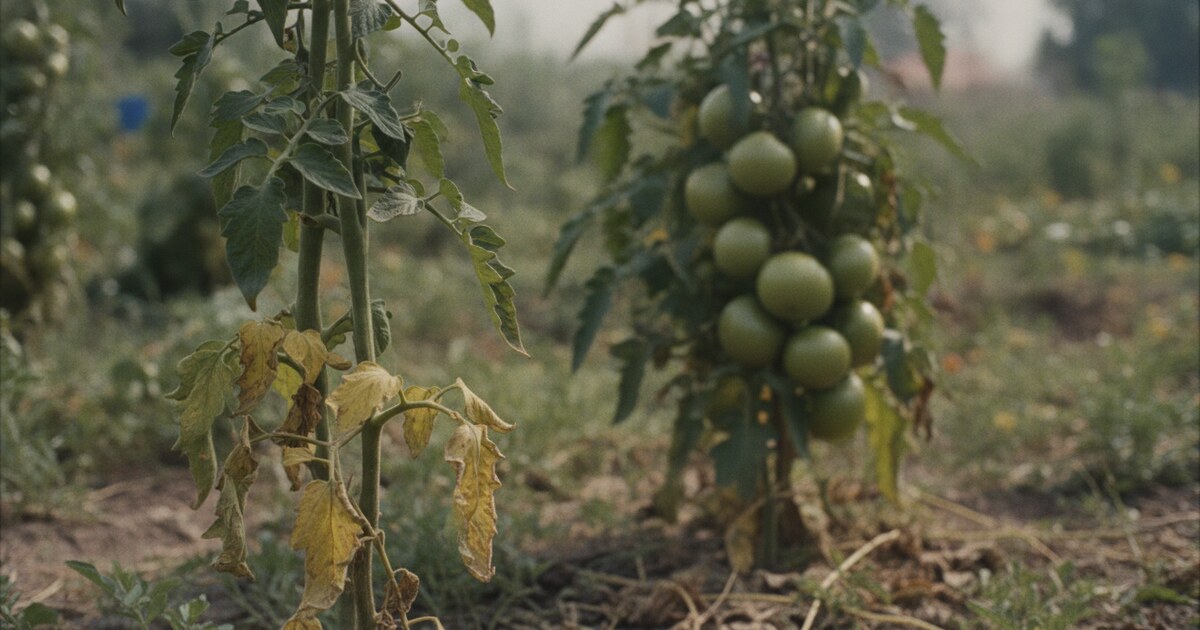
Tomato leaves turning yellow is one of the most common distress signals in the vegetable garden, and the frustrating part is that at least seven different problems produce the same symptom. Nitrogen deficiency looks nearly identical to early blight in its early stages. Overwatering mimics underwatering. And perfectly healthy bottom leaves turn yellow on their own as the season progresses.
The fix depends entirely on the cause. Getting it wrong means treating a healthy plant for a disease it doesn’t have, or missing a spreading fungal infection that could wipe out your harvest.
Quick answer: Tomato leaves turning yellow most often signal nitrogen deficiency, early blight, or overwatering. Bottom leaves yellowing first points to nitrogen loss or natural aging. Interveinal yellowing (green veins, yellow tissue in between) points to magnesium or iron deficiency. Spots with yellow halos mean fungal disease. Each cause has a distinct fix.
Where the Yellowing Starts Tells You the Cause
Before reaching for fertilizer or fungicide, look at which leaves are yellowing and what the yellow looks like. Location and pattern narrow the cause down fast.
If your tomato foliage has gone purple rather than yellow, that’s a separate set of causes covered in the guide to tomato leaves turning purple.
| Pattern | Most Likely Cause |
|---|---|
| Oldest/bottom leaves, uniform pale yellow | Nitrogen deficiency or natural aging |
| Older/middle leaves, yellow between green veins | Magnesium deficiency |
| New/top leaves, yellow between green veins | Iron deficiency |
| Yellow halos around bull’s-eye brown spots | Early blight |
| Tiny circular spots with yellow halo | Septoria leaf spot |
| Uniform yellow, wet soil, possibly soft stems | Overwatering / root rot |
| Dull yellow, dry soil, drooping or curling | Underwatering / heat stress |
| Pale stippling, fine webbing on leaf underside | Spider mites |
This triage takes about 30 seconds and points you to the right section below.
Nitrogen Deficiency: The Leading Cause of Tomato Leaves Turning Yellow
Nitrogen is the nutrient tomatoes need most, and it’s the first to run out in garden soil by midsummer. Tomatoes are heavy feeders: in home garden beds, they need about 1 pound of actual nitrogen per 100 square feet per season, roughly four times the nitrogen requirement of beans and twice that of cucumbers. Texas A&M AgriLife Extension data shows tomatoes are among the highest-demand vegetable crops for nitrogen, potassium, and phosphorus. Nitrogen is a mobile nutrient: the plant pulls it from older tissue to feed new growth when levels drop. The oldest leaves at the bottom lose chlorophyll first; yellowing is uniform and pale, without spots or halos. The mobile-nutrient pattern matters for diagnosis: nitrogen, magnesium, and potassium all show deficiency in older leaves first, while iron and calcium (which are immobile) show deficiency in new growth. Container-grown tomatoes in potting mix need supplemental feeding every 2-3 weeks from fruiting onward, since nutrients leach with each watering.
Sandy soils, raised beds with heavy mulch, and containers lose available nitrogen faster than loamy garden beds. A stretch of heavy rain can flush surface-applied nitrogen out of the root zone within days.
The fix: Feed with a balanced vegetable fertilizer (a higher first number, like 10-5-5 or 8-5-5) every 2-3 weeks from fruiting onward. For a faster correction, water in a fish emulsion or liquid nitrogen fertilizer; pale leaves often green up within 7-10 days. Yellow leaves that have already turned won’t recover, but new growth will come in healthy.
Magnesium and Iron Deficiency
If the veins on your older or middle leaves stay green while the tissue between them turns yellow, that’s interveinal chlorosis. On leaves in the middle or bottom of the plant, this pattern almost always means magnesium deficiency.
Magnesium is mobile, so the plant borrows from mature leaves first. Sandy soils, over-limed soil (pH above 7.5), and heavy potassium fertilization (which blocks magnesium uptake) all set the stage.
Iron deficiency shows the same interveinal pattern but on new growth at the top of the plant. Iron is immobile, so young leaves go yellow first. High soil pH (above 7.0) is the most common cause because it locks iron into forms the plant can’t use.
The fix for magnesium: Spray leaves with a foliar Epsom salt solution (1 tablespoon per gallon of water) weekly for 3-4 weeks. For soil correction, work in dolomite lime or Epsom salt at the base and water it in deeply.
The fix for iron: Lower soil pH with sulfur amendments or acidic fertilizer. Chelated iron foliar spray works as a fast stopgap while pH adjustments take hold over several weeks.
Overwatering and Root Rot
Tomato leaves turning yellow with wet, saturated soil and no visible spots or lesions usually point to overwatering or root rot. The whole plant may look limp and yellow at the same time, not just the bottom tier.
Pull back the mulch and check soil moisture 2 inches down before each watering. Tomatoes need 1-2 inches of water per week total, more during fruit set in peak heat. The guide to overwatered vs. underwatered plants covers how to tell the two apart when symptoms look similar.
Root rot from Phytophthora or Pythium fungi sets in when soil stays waterlogged: these pathogens colonize roots within 48-72 hours in saturated conditions at 60-80°F, turning them brown and mushy. The plant can’t take up water even when it’s available. Soft or discolored stems at the soil line confirm root rot is involved.
The fix: Cut back watering immediately and let the top 2-3 inches of soil dry before watering again. For container plants, tip out the pot, trim black or mushy roots, and repot in fresh well-draining mix. If stems are soft throughout the main trunk, the plant may not be salvageable.
Early Blight, Septoria, and Other Fungal Diseases
Early blight (caused by Alternaria solani) is the most common fungal disease on tomatoes in home gardens, and it moves fast. The first sign is small, dark brown spots with a target-like ring pattern on each lesion. The defining feature: a yellow halo surrounding each spot.
It starts on the oldest, lowest leaves and climbs the plant. At 75-85°F with humid nights or wet foliage, early blight can defoliate the lower third of a plant within 2-3 weeks. Each lesion releases spores that splash onto surrounding tissue with rain or overhead irrigation.
Septoria leaf spot (Septoria lycopersici) produces many tiny circular spots (3-6 mm) with a beige center and dark border, also ringed by a yellow halo. Both diseases spread through splashing soil and infected plant debris. The guide to septoria leaf spot treatment covers the full treatment protocol for Septoria specifically.
The fix: Remove infected leaves at the first sign, bag them, and don’t compost them. Apply a copper-based fungicide or chlorothalonil on a 7-10 day schedule. Mulch 2-3 inches deep to cut down on soil splash. For next season, disease-resistant varieties (Defiant, Juliet, Legend, Mountain Fresh) carry early blight tolerance bred in.
Underwatering and Heat Stress
When soil is dry and tomato leaves turn dull pale yellow with curling edges and drooping, the plant is moisture-stressed. Underwatering mimics nitrogen deficiency, but dry soil 2 inches down gives it away immediately.
Heat compounds the problem. At temperatures above 95°F, tomato plants close their stomata to conserve water, reducing nutrient uptake. Yellowing from heat often starts on the most sun-exposed leaves rather than the bottom tier.
The fix: Water deeply at the soil line (not overhead) until water reaches the bottom of the root zone. Soaker hoses and drip irrigation deliver moisture directly without wetting foliage. During heat waves, 30-50% shade cloth keeps leaf temperatures below the stress threshold.
Pests: Spider Mites and Aphids
Spider mites cause pale stippling that looks like tiny sand-sized dots scattered across the leaf surface. Turn the leaf over and look for fine webbing along the veins and stem. Mites thrive in hot, dry conditions (above 80°F, below 50% humidity) and can build to damaging populations in 7-14 days.
Aphids cluster on new growth and the undersides of leaves. They excrete a sticky substance that makes leaves tacky and can encourage sooty mold to grow. Light infestations cause mild yellowing and leaf curl; heavy infestations stunt entire branches.
The fix: For spider mites, rinse plants with a strong water spray to knock them off, then apply insecticidal soap or neem oil every 5-7 days for 3-4 weeks. For aphids, a strong water spray or neem oil handles most infestations. Skip broad-spectrum pesticides: they kill the predatory insects that keep mite and aphid numbers down.
When Yellow Tomato Leaves Are Normal
As tomato plants grow tall and dense, the lower leaves get shaded out by the canopy above. They yellow and drop naturally. The rest of the plant looks healthy, the soil moisture is correct, and there are no spots, halos, or webbing. That’s not disease; that’s normal leaf senescence.
Gardeners who train their plants on a single stem and remove suckers see more pronounced lower-leaf drop because the dense upper canopy shuts out light faster. A tomato dropping its oldest leaves during active fruiting is working as designed.
The fix: Remove these leaves by cutting cleanly at the stem to keep the base tidy and improve airflow. Clearing the bottom 12 inches of foliage also cuts down on splash-borne disease.
How PlantlyAI Helps You Diagnose Faster
A visual pattern on a yellowing leaf is easier to place when you can compare it against thousands of diagnosed cases. PlantlyAI lets you photograph a yellowing leaf and get a diagnosis in seconds, whether the cause is early blight, nitrogen deficiency, or a spider mite infestation.
The app gives you a step-by-step treatment plan with organic, biological, and chemical options so you can choose what fits your garden. It works for tomatoes, cucumbers, squash, and other vegetables, as well as houseplants. Two free diagnoses are available daily, and no account is required to get started.
Download PlantlyAI on the App Store or Google Play.
Frequently Asked Questions
How can I fix yellowing tomato plant leaves?
The fix depends on the cause. Yellow from nitrogen deficiency responds to balanced vegetable fertilizer within 7-10 days. Early blight needs copper fungicide and immediate removal of infected leaves. Overwatering means cutting back water and improving drainage. Yellow leaves that have already turned won’t green up again, but correct treatment stops the spread to healthy leaves above.
Should I cut off yellowing tomato leaves?
If the yellowing comes from disease (spots, halos, lesions), remove the leaves immediately and bag them. Diseased leaves left on the plant or dropped to the soil spread spores to healthy tissue above. Yellow leaves from nutrient deficiency or natural aging can be removed for tidiness, but it’s not urgent since they’re not spreading anything infectious.
What are the signs of an overwatered tomato plant?
Overwatered tomatoes show uniform yellowing across multiple leaves at once, often with soft or spongy stems near the soil line, persistently saturated soil, and sometimes white mold on the soil surface. The plant may also wilt despite wet soil, which is the signature of root rot: damaged roots can’t deliver water even when it’s available, so the plant looks drought-stressed while the soil stays soaked.
What does baking soda do for tomato plants?
Baking soda (sodium bicarbonate) raises the surface pH of leaves, creating a less hospitable environment for fungal spores. Some gardeners use a diluted spray (1 teaspoon per quart of water) to suppress early-stage powdery mildew or early blight. The effect is preventive, not curative: it slows spread rather than eliminating an established infection. For active fungal disease, copper fungicide is significantly more effective.
Not sure what's wrong? Diagnose your plant free
Upload a photo to our free plant disease identifier and get an instant diagnosis.