Tradescantia Losing Color and Getting Leggy: Causes & Fixes
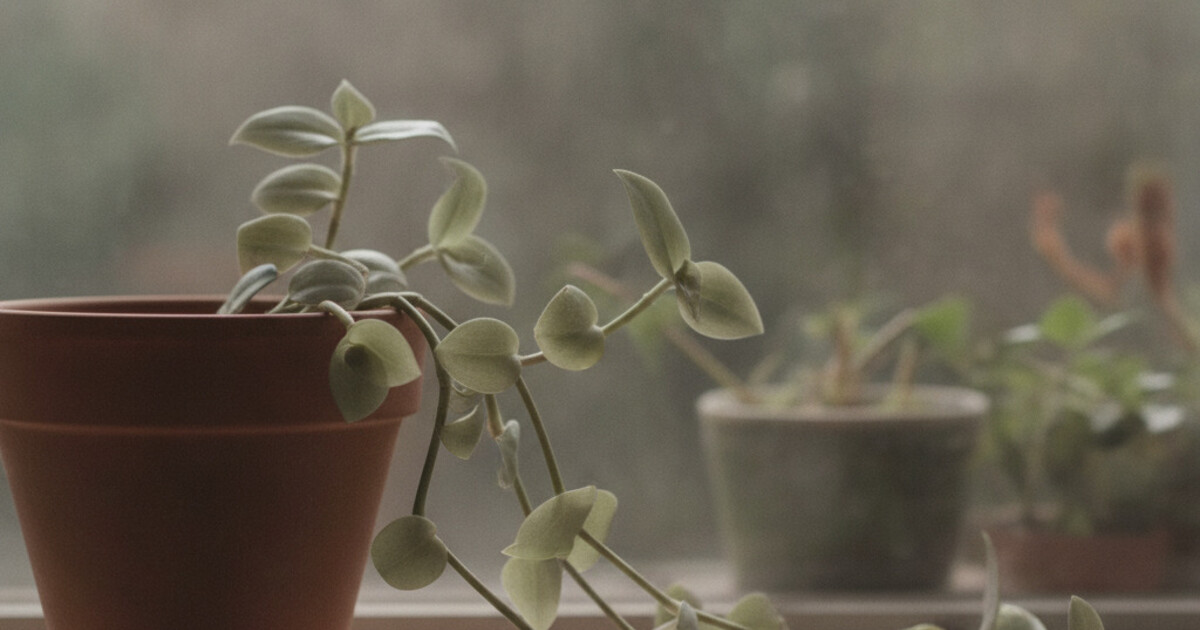
Your tradescantia used to have bold silver stripes, rich purple undersides, or that striking variegated pattern it first came home with. Now the leaves look washed out, the stems stretch long and bare between nodes, and the whole plant looks sorry for itself. You’re dealing with two classic symptoms that show up together for a reason.
Tradescantia losing color and getting leggy at the same time almost always trace back to one problem. Both symptoms are your plant’s response to conditions it’s not happy with, and fixing one usually fixes the other.
Quick answer: Tradescantia loses color and gets leggy when it doesn’t get enough light. The plant can’t produce its purple and silver anthocyanin pigments without adequate brightness, and it stretches toward any available light source. Move it to 6+ hours of bright indirect light and cut leggy stems back to 2-3 nodes. Color recovers in 3-6 weeks.
Why Tradescantia Loses Its Color
The colors that make tradescantia worth growing (silver stripes, purple undersides, deep violet foliage) come from anthocyanins, a class of pigment produced in response to light. These aren’t static pigments baked into the leaf structure. The plant actively produces and maintains them only when light levels are high enough.
Tradescantia belongs to the Commelinaceae family, with about 85 recognized species spread across tropical and subtropical Americas. The most common houseplant varieties are T. zebrina (native to Mexico, known for silver-striped leaves with deep purple undersides), T. pallida ‘Purple Heart’ (eastern Mexico origin, all-purple foliage), T. fluminensis (South America, cream-and-green variegated leaves), and T. sillamontana (northeastern Mexico, silver-fuzzy stems). The coloration in all these varieties comes from anthocyanins, pigments that require light to form and maintain. At light levels below 500 lux, plants shift toward chlorophyll production within 4-8 weeks, and the distinctive colors fade noticeably. In bright indirect light (1,000-2,000+ lux), full color returns. In ideal conditions (65-80°F, 6+ hours of bright indirect light), tradescantia grows 6-12 inches per month. Pinching stems back by 2-3 nodes encourages 2-4 new shoots per cut point, which is the fastest path to a fuller, more colorful plant.
When light drops below that threshold, the plant makes a metabolic trade-off. Chlorophyll gets prioritized over anthocyanins, since chlorophyll is what captures the little light the plant does have. Leaves shift from purple to gray-green, stripes fade to a dull wash, and new growth comes in almost entirely green.
The color loss is reversible. The plant cells that produce anthocyanins are still there and still functional. Once you restore proper light, new leaves come in with full color. Older bleached leaves won’t change, but they’ll get outnumbered by vibrant new growth within a few weeks.
Why Tradescantia Gets Leggy
Leggy growth in tradescantia has the same root cause: low light. When a plant can’t find enough light where it sits, it stretches toward any available source, sending energy into stem elongation rather than leaf production.
A healthy tradescantia in good light produces nodes every 1-2 inches, with leaves that unfurl densely along the stem. A light-starved plant produces nodes 3-5 inches apart, with smaller leaves and obvious bare stretches of stem between them. The stems themselves get thinner and weaker, and the whole plant starts to look sparse.
Leggy growth also compounds itself. The more the stems stretch and trail, the farther the leaf canopy gets from the light source, and the less light reaches the lower portions of the plant. Left unchecked, stems trail long and bare while the growing tips stretch toward the window.
Old stems also get leggy over time regardless of light, because tradescantia is a fast grower that naturally gets woody and bare at the base after a year or two. This pattern is different from light-related legginess: it starts at the bottom of the plant rather than appearing uniformly across all growth.
How to Fix a Fading, Leggy Tradescantia
The fix is straightforward. Move the plant to better light and cut the leggy stems back. Both steps together get you results faster than either one alone.
Step 1: Find the right light. Tradescantia wants 6+ hours of bright indirect light per day. A spot 2-3 feet from a south or west-facing window usually works well. T. pallida ‘Purple Heart’ tolerates and actually benefits from 1-2 hours of gentle direct morning sun. T. zebrina and T. fluminensis prefer indirect light and can develop burn patches with strong direct afternoon sun.
Step 2: Cut back the leggy stems. Tradescantia is almost impossible to kill by pruning. Cut each leggy stem back to 2-3 nodes above the soil, right above a leaf node. The plant will push 2-4 new shoots from each cut point, producing a much bushier plant over the following weeks.
Step 3: Propagate the cuttings. Don’t discard what you cut. Tradescantia propagates as easily as any common houseplant. Strip the bottom 2 leaves off each cutting, drop it in a glass of water, and roots appear within 7-14 days. Plant the rooted cuttings back into the original pot to fill it out, or start a new pot entirely.
Step 4: Give it 3-6 weeks. New growth after the move will come in with full color right away. The existing faded leaves won’t recover (they’ve lost the pigments permanently), but they’ll be outnumbered by new vibrant growth within a month or so.
Rotate the pot 90 degrees every 2-3 weeks to keep growth even on all sides. Plants that sit in one position long enough will lean noticeably toward the light source.
Other Causes to Rule Out
If your tradescantia sits in bright light and still loses color or gets leggy, a few other factors are worth checking.
Overwatering can cause weak, elongated growth indirectly. When roots sit in soggy soil, they can’t absorb nutrients efficiently, and overall plant health declines. Check the soil before every watering: the top inch should be dry before you add water. For more on telling the two apart, the guide on overwatered vs underwatered plant covers the key signs for houseplants.
A pot that’s too large can also create problems. More soil holds more moisture, which means roots stay wet longer and the plant stays stressed. Tradescantia grows best slightly potbound. A pot 1-2 inches wider than the root ball is the right size.
Fertilizer timing matters too. A balanced liquid fertilizer (10-10-10 or 20-20-20) once a month from spring through early fall gives the plant what it needs for strong, colorful growth. Skip fertilizing in winter entirely.
Natural reversion can occasionally cause color loss in heavily variegated varieties. If one stem produces leaves that are entirely green with no stripes or pattern, trim it off at the base. All-green shoots are more vigorous than variegated ones and will gradually take over the plant if left in place.
How PlantlyAI Can Help
When your tradescantia shows unusual symptoms and you’re not sure whether you’re looking at a light problem, a disease, or a pest issue, a quick photo diagnosis takes the guesswork out of it.
PlantlyAI lets you photograph your plant and get an AI diagnosis that identifies the specific problem and walks you through a step-by-step fix. Similar symptoms in houseplants (fading leaves, weak growth, discoloration) can have multiple causes, and the treatment differs depending on the actual cause. Getting the right answer first saves a lot of time.
The app gives you 2 free diagnoses a day without creating an account, and it covers disease, pests, and care problems across houseplants, vegetable gardens, and outdoor plants. If your tradescantia’s leaves are developing spots or unusual texture alongside the color fading, it’s worth ruling out a fungal or bacterial issue before assuming it’s purely a light problem.
For similar symptom troubleshooting on other trailing houseplants, the guides on hoya leaves wrinkled and shriveled and string of hearts leaves mushy and yellow show how overlapping symptoms often have different root causes.
Frequently Asked Questions
Why does my tradescantia have green leaves when it used to be purple? The purple and silver tones in tradescantia come from anthocyanin pigments, which the plant produces in response to light. When light drops below what the plant needs, it shifts toward chlorophyll production and the purple fades to green. Move the plant to a brighter spot and new growth will come in with full color within 3-6 weeks.
How much light does tradescantia need? Tradescantia does best with 6+ hours of bright indirect light per day. T. pallida ‘Purple Heart’ can handle 1-2 hours of direct morning sun and actually benefits from it for the deepest color. T. zebrina and T. fluminensis prefer indirect light and can develop yellow-white burn patches with strong direct afternoon sun.
Should I cut back a leggy tradescantia? Yes. Tradescantia responds well to hard pruning. Cut each leggy stem back to 2-3 nodes above the soil, right above a leaf node. The plant will produce 2-4 new shoots from each cut point. The cuttings root in water within 7-14 days, and you can use them to fill out the original pot.
Will faded leaves turn purple again? Existing faded leaves won’t regain their color. Once anthocyanins are lost from a leaf, they don’t return. New leaves that grow after you move the plant to better light will come in with full color immediately, and they’ll gradually outpace the faded older growth.
Can tradescantia get leggy even in a sunny window? Yes, if the window faces north or gets blocked by trees or a nearby building. Leggy growth happens when the plant receives less than 1,000 lux for more than a few weeks. A north-facing window in winter often isn’t bright enough, even right on the sill. A grow light on a 12-hour timer solves this during the darker months.
Snap a photo of your tradescantia in PlantlyAI to confirm what you’re dealing with before starting treatment. The app is free to try, works on iOS and Android, and gives you a diagnosis with a specific treatment plan in about 30 seconds. Download it on the App Store or Google Play.
Not sure what's wrong? Diagnose your plant free
Upload a photo to our free plant disease identifier and get an instant diagnosis.