Why Is My Jade Plant Dying With Mushy Leaves?
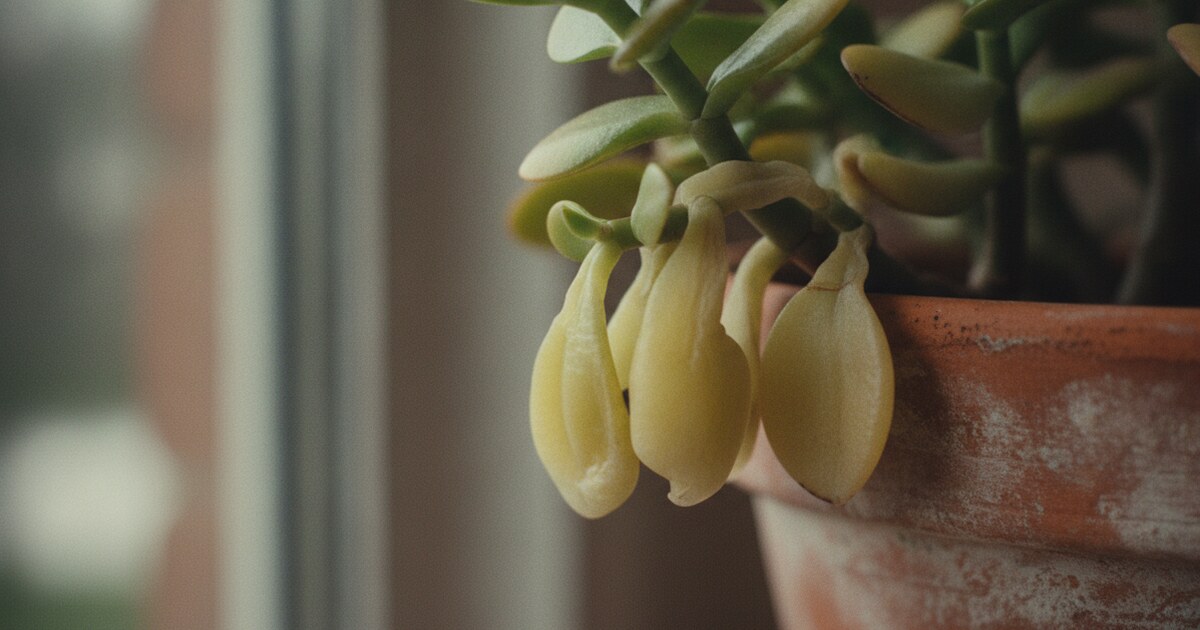
Jade plants are famously tough. They go weeks without water, survive periods of neglect, and live for decades with minimal care. So when you notice the leaves turning soft and mushy and the plant looking like it’s dying, it feels alarming.
The problem is almost always too much water. Jade is a succulent (Crassula ovata) that stores moisture in its fleshy leaves. When those leaf cells take in more water than they can hold, the cell walls rupture and the leaves go soft. Root rot usually follows. Acting fast gives most jade plants a good chance at recovery.
Mushy jade plant leaves mean the plant has absorbed more water than its cells can hold. Jade stores reserves in its fleshy leaves, and overwatering ruptures those cells, turning them soft and translucent. Root rot usually follows. Stop watering immediately, unpot the plant, trim any rotted roots, and repot in dry, fast-draining succulent soil.
Why Jade Plant Leaves Go Mushy
Jade plants evolved in the rocky, arid hillsides of South Africa and Mozambique. Their thick, fleshy leaves function as water storage organs, holding reserves that sustain the plant through long dry periods. That survival mechanism is excellent in drought conditions, but it becomes a liability when the plant sits in consistently wet soil.
When roots have continuous access to moisture, water is pushed into the leaf cells faster than the plant can use it. The cells fill past their capacity, the walls rupture, and the leaves turn soft and translucent. Root rot follows quickly. Fungal pathogens (primarily Pythium and Phytophthora species) colonize waterlogged roots within days, destroying root tissue and cutting off the plant’s ability to absorb nutrients. Jade plants need their soil to dry out completely between waterings: every 7 to 14 days in summer, and every 20 to 30 days in winter when growth slows. In a 4-inch pot at average home humidity (40 to 50%), that typically means waiting 10 or more days between waterings in warm months. Containers without drainage holes trap standing water at the root zone and speed up rot significantly. Most jade plant deaths trace back to two mistakes: watering on a fixed calendar schedule rather than checking soil moisture first, or using a pot without drainage.
Other Causes of a Dying Jade Plant
Mushiness strongly points to overwatering, but a few other factors can contribute or produce a similar look:
Poor drainage. A container without holes, or dense peat-heavy potting soil, keeps roots sitting in moisture even at a reasonable watering frequency. Always use containers with drainage holes, and choose a mix that dries out fully within a week of watering.
Cold damage. Temperatures below 50°F (10°C) can soften and discolor jade leaves, causing a look that’s sometimes confused with overwatering. Cold damage tends to appear uniformly across all leaves rather than starting near the base, which helps you tell the two apart. Keep jade above 55°F year-round.
Root-bound plants. A severely root-bound jade in old, compacted soil loses drainage efficiency over time. The circling roots create uneven wet and dry zones that stress the plant and leave pockets of perpetually damp soil.
If your jade leaves are wrinkling or shriveling rather than going soft, that points to the opposite issue. Shriveled leaves usually mean underwatering or very low humidity, which is the opposite end of the spectrum. If you’re not sure which direction you’ve gone, the guide on overwatered vs underwatered plants lays out the visual differences side by side.
How to Tell If Your Jade Plant Can Be Saved
Before you start cutting roots and repotting, spend a few minutes checking how far the damage has gone.
Press the main stem near the base. If it feels firm, the vascular tissue is likely intact. If it collapses under light pressure, rot has moved above the soil line and full recovery is unlikely.
Unpot and look at the roots. Healthy jade roots are firm and range from white to light tan. Rotted roots are brown or black, soft, and often smell sour. If less than half the root system is affected, recovery is realistic. If most of the roots are gone or the rot has reached the crown, the plant probably won’t make it.
Check which leaves are affected. Soft leaves clustered near the base of the plant are more concerning than a few mushy tips on outer branches. Base-level softness means the damage is close to the main stem and root zone.
Look at the stem color near the soil. Healthy stem tissue is firm and green to brown. A stem that’s darkened, shrunken, or wet-looking at the soil line means rot has climbed above the roots.
If you’re not sure whether you’re dealing with root rot, a bacterial infection, or something else, photographing the plant and running a diagnosis can give you a clearer picture before you commit to the surgery.
How to Revive a Dying Jade Plant With Mushy Leaves
If the main stem is still firm and some healthy root tissue remains, here’s how to bring the plant back:
Step 1: Stop watering. Set the plant aside without adding any more water. Watering a plant that’s already drowning accelerates root rot.
Step 2: Unpot and brush off the soil. Gently remove the jade from its container. Shake loose as much soil as you can and get a clear look at the root ball. Wet, sour-smelling soil confirms overwatering.
Step 3: Trim the rotted roots. Use scissors or pruning shears wiped with rubbing alcohol. Cut brown, soft roots back to firm, white tissue. If a root is brown inside when you cut it, keep trimming until you reach healthy material. Remove the root entirely if no healthy tissue is found.
Step 4: Let the roots dry. Set the plant on a dry surface for 24 to 48 hours before repotting. The cut ends need to callous over, which reduces the risk of new fungal infections entering the wounds. Skipping this step is a common reason rescues fail.
Step 5: Repot in fresh, fast-draining mix. Use a commercial cactus or succulent potting mix, or blend regular potting soil 50/50 with perlite. Choose a clean pot with drainage holes. Size it modestly: a smaller root system doesn’t need a large container, and excess soil holds moisture the roots can’t reach.
Step 6: Hold off on watering. Wait at least 7 days after repotting before adding any water. The roots need time to settle into dry soil and start regenerating. When you do water, do it thoroughly, then let the soil dry completely before watering again.
Leaves that have already turned mushy won’t recover on their own. Remove them cleanly to prevent spread. If the plant stabilizes, new growth will emerge from the active tips over the following weeks. Recovery is slow. Don’t expect visible improvement in less than 3 to 4 weeks.
For other succulents going through the same problem, the step-by-step process in how to save an overwatered succulent covers the full recovery protocol in detail.
How PlantlyAI Helps With Jade Plant Problems
If you’re not certain whether the mushiness is overwatering, a fungal infection, or cold damage, a photo diagnosis gives you a faster answer than guessing from symptoms alone.
PlantlyAI identifies plant problems from a single photo. Snap a picture of the affected leaves and stem, and the app gives you a diagnosis along with a step-by-step treatment plan. It covers organic, biological, and chemical options depending on what the plant needs. You get 2 free scans per day without creating an account, and it works on both iOS and Android.
When a jade plant looks bad and you’re not certain which direction to take, a quick diagnosis helps you skip the guesswork and go straight to the right fix.
Frequently Asked Questions
Can a jade plant come back from root rot? Yes, if less than half the roots are affected. Trim the rotted sections back to firm white tissue, let the cut ends dry for 24 to 48 hours, then repot in fresh succulent mix. New roots grow from healthy tissue within a few weeks, and the plant typically stabilizes within a month of repotting.
How do I know if I’m overwatering my jade plant? Mushy, soft, translucent leaves are the clearest sign. You may also notice yellowing leaves, leaf drop near the base, and soil that stays wet for more than a week after watering. Always check the soil moisture before watering: jade soil should feel dry at least 2 inches down.
Why are my jade plant leaves falling off? Leaf drop alongside mushiness almost always means overwatering. If the leaves are dry and shriveled before they fall, underwatering or low humidity is more likely. Checking soil moisture first tells you which direction the problem is coming from.
How often should I water a jade plant? Every 7 to 14 days in summer, and every 20 to 30 days in winter. Always check soil moisture rather than watering on a schedule. Jade tolerates drought far better than excess moisture, and most jade plant deaths are caused by overwatering rather than underwatering.
What soil mix works best for jade? A cactus or succulent potting mix, or regular potting soil blended 50/50 with perlite. You want soil that dries out fully within 7 to 10 days of watering. Avoid mixes with high peat content or moisture-retaining additives, which keep roots sitting in damp conditions for too long.
If your jade has mushy leaves and you want a fast diagnosis, photograph the plant and run a free scan in PlantlyAI. Download it for iOS or Android and check what’s wrong before deciding whether the plant can be saved.
Not sure what's wrong? Diagnose your plant free
Upload a photo to our free plant disease identifier and get an instant diagnosis.