How to Save a Dying Pothos (Step-by-Step)
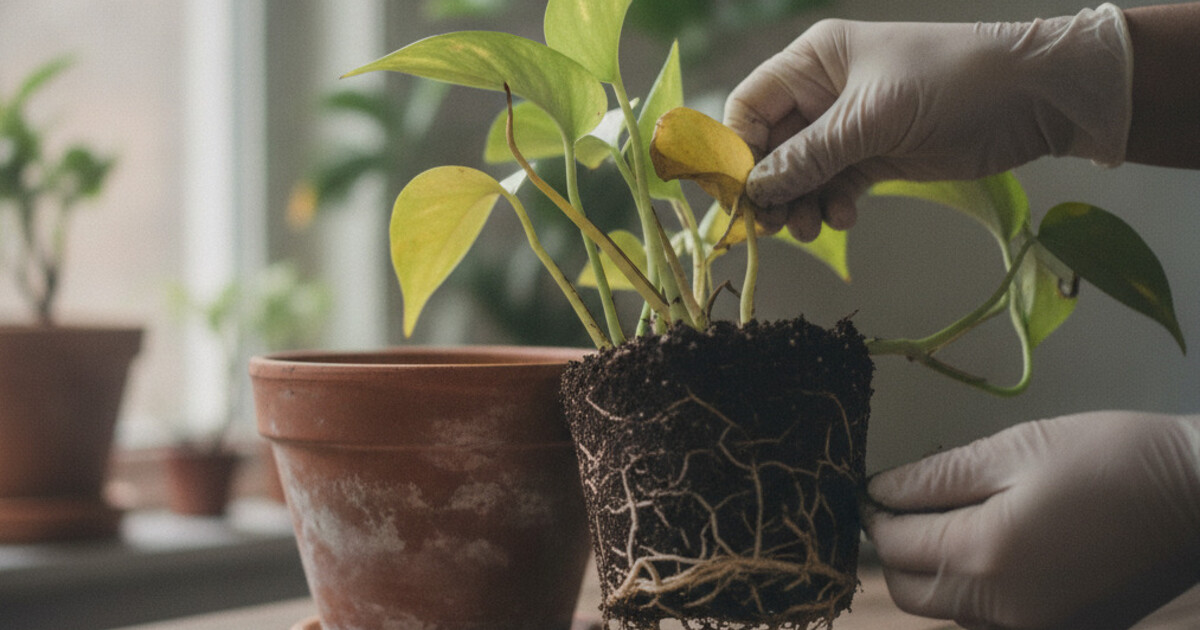
Pothos is supposed to be the beginner’s plant. Drop it in a corner, forget to water it for two weeks, and it bounces back just fine. But even pothos has a breaking point, and overwatering is usually the one that finds it: leaves yellowing from the base up, stems going soft near the soil line, the whole plant drooping even though the pot feels wet.
Most dying pothos can be brought back. The rescue path depends on what’s actually wrong, though. An underwatered pothos perks up within hours of a good soak. A plant with advanced root rot needs its roots cleaned out and a fresh start in dry soil. Catching which problem you’re dealing with is the first step.
Quick answer: A dying pothos most often has root rot from overwatering. Let the soil dry completely, then unpot the plant and check the roots. Cut any black or mushy roots with sterile scissors, dust the cuts with cinnamon, and repot in fresh, perlite-heavy mix. Water again only when the top 2 inches of soil are dry.
Why Is My Pothos Dying?
Pothos (Epipremnum aureum) is native to Mo’orea, French Polynesia, where it grows as a forest-floor climber in warm, humid conditions with fast-draining volcanic soil. In pots, the single biggest killer is waterlogged roots. Pythium and Phytophthora, the water molds responsible for root rot in most houseplants, colonize saturated roots within 24 to 48 hours. Anaerobic soil (where oxygen is blocked) lets them spread from root tips into the crown. Once they reach the crown, leaves yellow from the bottom up, stems go mushy at the soil line, and the decline accelerates.
Pothos grows best with 400 to 800 lux of indirect light and watering every 7 to 10 days in summer, stretching to 14 to 21 days in winter. Cold damage begins below 50°F (10°C). Pests (spider mites, mealybugs, and scale) cause slower, progressive decline rather than sudden collapse.
The five most common causes of a dying pothos:
- Overwatering and root rot — the #1 killer; soil stays wet for weeks, roots suffocate
- Underwatering — less common, but leaves curl inward, wrinkle, then drop
- Low light — causes slow, pale decline over weeks, not sudden collapse
- Root-bound stress — when the pot is packed with roots, water runs straight through and the plant can’t absorb it
- Pest infestation — spider mites and mealybugs weaken the plant gradually over weeks
How to Diagnose a Dying Pothos
Before doing anything else, check the soil and roots. That one step narrows the cause to one or two possibilities.
Soil test: Push your finger 2 inches into the soil. If it’s wet after 14 or more days without watering, root rot is likely. If it’s bone-dry and the leaves are limp or curled, underwatering is the problem.
Root check: Pull the plant gently from its pot. Healthy roots are white or light tan and firm. Rotted roots are brown or black, mushy, and often have a sour smell. If most of the root system has collapsed to slime, the rot is advanced.
Leaf and stem signals:
- Yellow leaves from the base upward: usually overwatering or root rot
- Yellow leaves scattered throughout: could be low light or nutrient deficiency
- Crispy, brown leaf edges: underwatering or low humidity
- Black, mushy stem at the soil line: rot has reached the crown (act fast)
- Tiny webbing on leaves with a stippled texture: spider mites
For a full side-by-side of wet vs. dry stress, see Overwatered vs Underwatered Plant: How to Tell. If your pothos also has brown spots alongside the yellowing, Brown Spots on Pothos Leaves breaks down those causes separately.
How to Save a Dying Pothos: Step-by-Step
This 7-step rescue covers the most common scenario: root rot from overwatering. If your diagnosis points to underwatering instead, skip to the underwatering fix after Step 2.
Step 1: Stop watering immediately. Don’t add water no matter what the leaves look like. Wet roots that are already rotting need air, not more moisture.
Step 2: Unpot the plant. Slide the root ball out of its pot. Work over newspaper or a tray to catch the old soil.
Step 3: Rinse and inspect the roots. Run the roots under lukewarm water to remove old soil. Look at each root. Firm and white or tan means healthy. Soft, brown or black, and pulling apart easily means rot.
Step 4: Cut away rotted roots. Use sharp scissors or pruning shears sterilized with rubbing alcohol. Cut all mushy, dark, or slimy roots back to firm tissue. If the remaining healthy roots are less than 30% of the total, trim the stems back by about a third to reduce the demand on what’s left.
Step 5: Treat with cinnamon or hydrogen peroxide. Dust the cut root ends with powdered cinnamon, which has natural antifungal properties. Or soak the root ball for 30 minutes in a solution of 1 part 3% hydrogen peroxide to 3 parts water. Both steps kill remaining Pythium and Phytophthora spores before they spread.
Step 6: Repot in fresh, fast-draining mix. Use a clean pot with drainage holes, one size smaller than the original if the root system is severely reduced. Fill with a mix of 60% standard potting soil, 30% perlite, and 10% coarse bark. This mix dries faster and keeps roots oxygenated.
Step 7: Recover in bright indirect light. Place the repotted plant where it gets 400 to 800 lux of indirect light. Don’t fertilize for at least 4 weeks. The plant needs to grow new roots before it can use nutrients. Water only when the top 2 inches of soil are completely dry.
For an underwatered pothos: Give it a thorough soak in a bucket or sink, letting water run freely from the drainage holes. If the soil has pulled away from the pot edges (a sign of severe dryness), let the pot sit in 2 to 3 inches of water for 30 minutes so the soil rehydrates from the bottom up. The plant typically perks back up within a few hours to a day.
Pothos Recovery: What to Expect
Recovery from root rot takes 4 to 8 weeks. The plant won’t look great at first. It may drop more leaves in the first two weeks as it sheds foliage it can’t support with a reduced root system. That’s a normal part of the process.
Signs recovery is working:
- Firm new growth appearing at the stem tips
- No more yellowing spreading into newer leaves
- Roots visible at the drainage holes (the root system is rebuilding)
If the stem is still mushy at the soil line after two weeks, or new leaves come in yellow, rot may have reached the crown. In that case, take stem cuttings from healthy sections (4 to 6 inches long, just below a node) and propagate them in water or fresh perlite. Pothos roots quickly from cuttings. New roots typically appear in 10 to 14 days. The same root rot treatment method works across most tropical houseplants: see How to Save a Dying Snake Plant (Step-by-Step) for a parallel rescue on a different species.
How PlantlyAI Helps Diagnose a Dying Pothos
Most of the time, diagnosing a dying pothos manually gets you the answer. Some cases are less obvious, though. A plant dropping leaves could have root rot, spider mites, or a nutrient deficiency, and the visual cues overlap.
PlantlyAI lets you snap a photo of your sick pothos and get an AI diagnosis in seconds. The app identifies the specific problem (overwatering, pest, disease, or something else) and gives you a step-by-step treatment plan with organic, biological, and chemical options so you can pick what works for your situation. If you’re unsure what you’re looking at when you pull the plant from its pot, photographing the roots or leaves through the app narrows it down fast. PlantlyAI is free to start: 2 diagnoses per day on iOS and Android, no account needed.
Frequently Asked Questions
Can a pothos recover from root rot?
Yes, if you catch it before the rot reaches the crown. Cut all mushy, black, or soft roots with sterile scissors. Dust the wound ends with powdered cinnamon, then repot in fresh, perlite-heavy mix. Plants with at least a few firm white or tan roots can recover in 4 to 8 weeks.
Why are my pothos leaves turning yellow?
Yellow leaves on pothos usually mean overwatering, though low light, rootbound stress, and natural aging (bottom leaves on older plants turn yellow and drop on their own) can all cause it. Check the soil first. If it’s been wet for more than two weeks, root rot is the likely cause. Let it dry out completely before watering again.
How often should I water a pothos?
Every 7 to 10 days in summer, less in winter when growth slows. The cleaner rule: water when the top 2 inches of soil are dry. Push your finger in to the second knuckle. If soil clings and feels damp, wait a few more days.
Can you save a pothos with no roots?
Sometimes. If the stems are still firm and green, cut 4 to 6-inch sections just below a node, strip the bottom leaves, and place them in water or moist perlite. Roots appear in 10 to 14 days in a warm spot with bright indirect light. It’s not guaranteed, but it works often enough to be worth trying.
Why is my pothos wilting even after watering?
Wilting after watering usually signals root rot. Healthy roots absorb water; rotted roots can’t. The plant is thirsty but can’t drink because the roots are gone. Pull the plant from its pot and check the root system. If roots are black and mushy rather than white and firm, treat for root rot instead of adding more water.
PlantlyAI takes the guesswork out of plant rescue. Snap a photo of your pothos and get a diagnosis and treatment plan in seconds. Download free for iOS or Android and use 2 free diagnoses a day, no account needed.
Not sure what's wrong? Diagnose your plant free
Upload a photo to our free plant disease identifier and get an instant diagnosis.