Hydrangea Leaves Turning Brown: 6 Causes and How to Fix Them
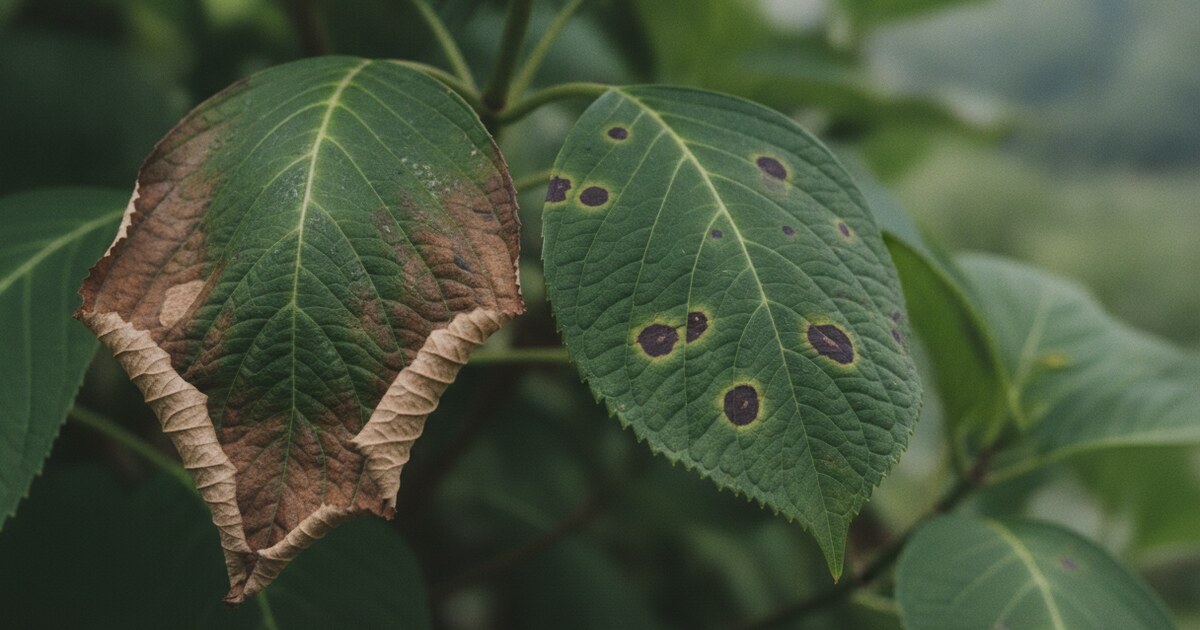
Your hydrangea was full of green leaves last week. Now they’re going brown at the edges, in dark patches, or in pale scorched patches across the top of the leaves. Hydrangea leaves turning brown is one of the more frustrating garden problems because the same symptom can point to six different causes.
The mistake most gardeners make is treating based on a guess. Water more when the real issue is overwatering and you’re accelerating root damage. Apply fungicide to sun scorch and you’ve wasted a week the plant doesn’t have. The pattern of the browning is the fastest way to narrow down what’s happening before you do anything.
This guide covers 6 causes in order from most to least common, what each one looks like, and what fixes work.
Quick answer: Hydrangea leaves turn brown most often from underwatering, sun scorch, overwatering, transplant shock, or fungal disease (Cercospora leaf spot or Botrytis blight). Read the browning pattern first: crispy, dry edges mean water or heat stress; soft or spotted patches point to disease. Each cause has a different fix.
What Brown Hydrangea Leaves Actually Look Like
The texture and location of the browning is your fastest diagnostic clue. Before watering, spraying, or moving the plant, look closely at how the damage appears.
- Crispy, papery edges and tips that curl = drought stress or sun scorch
- Soft, water-soaked dark patches; leaves go yellow before brown = overwatering or root rot
- Circular spots with purple or reddish-brown halos = Cercospora leaf spot
- Gray-brown patches with a fuzzy gray coating = Botrytis blight
- Browning and wilting within days of planting = transplant shock
- Uniform browning spreading inward from the tips = drought or sustained heat
That 30 seconds of looking before acting is worth taking.
Underwatering: Why Hydrangea Leaves Turn Brown at the Edges
This is the most common cause of browning on established hydrangeas, especially from late spring through early fall.
Drought browning starts at the outer edges and tips of leaves, then spreads inward. The texture is dry and papery. The whole plant may droop before you notice the browning, and the pattern is consistent across the plant, not patchy or spotty.
Healthy hydrangeas need steady moisture to support their large, thin leaves. In spring and fall, 1 inch of water per week is usually enough; during peak summer heat, that goes up to 2 inches. Watering depth matters more than frequency. Shallow watering that wets only the top 2 inches keeps roots near the surface, where they dry out fast. Deep watering soaks the soil to at least 6 inches so the entire root zone gets wet.
Deliver water at the base of the plant, not overhead; overhead watering wets the foliage and encourages fungal disease. A 2 to 3 inch layer of organic mulch around the base slows moisture evaporation and keeps soil temperature stable through heat waves.
During sustained heat above 90°F (32°C), even well-established hydrangeas can show crispy edges within 48 hours. Newly planted hydrangeas have smaller root systems and need daily watering for 2 to 3 weeks until established.
How to fix it: Water deeply at the plant’s base 2 to 3 times per week in summer, more during heat waves. Apply 2 to 3 inches of mulch. The existing brown edges won’t green back up, but new growth comes in healthy once you restore consistent moisture.
Sun Scorch and Afternoon Heat
Browning from sun scorch looks similar to drought stress but tends to affect the top-facing surfaces of leaves rather than just the edges. Scorched patches often start white or pale yellow before turning brown.
Most garden hydrangeas (Hydrangea macrophylla and Hydrangea serrata especially) prefer morning sun and afternoon shade. Direct afternoon sun after about 2pm drives temperatures at the leaf surface above what the plant can tolerate. The tissue dies, dries out, and turns brown. Plants in spots that get more than 6 hours of direct summer sun are at the highest risk.
The fix depends on how the plant is growing. For containers, moving to a morning-sun spot solves the problem within a week. For in-ground plants, shade cloth rated 30 to 40% blocks enough harsh midday sun without starving the plant of light. Existing scorched leaves won’t recover, but new growth comes in clean once you reduce the exposure.
If the browning is happening alongside wilting despite adequate watering, it’s often sun and drought stress working together.
Overwatering and Root Rot
Overwatered hydrangeas produce a different kind of brown: soft, dark, sometimes mushy at the margins.
The sequence usually starts with yellow. Leaves at the bottom of the plant go yellow first, then turn brown and limp. If the soil smells sour and stays wet days after you watered, the roots are probably suffocating. Soggy soil cuts off oxygen to the roots, and once roots start failing they can’t supply the leaves with water or nutrients even when the soil is saturated.
Persistent overwatering leads to root rot. If you’re not sure whether underwatering or overwatering is the issue, the overwatered vs. underwatered guide covers the visual differences in detail. For root rot that’s already set in, the root rot treatment guide walks through the full rescue process.
How to fix it: Let the soil dry out between waterings. Check that the pot or planting area drains well. For confirmed root rot, trim all brown mushy roots and repot in fresh, well-draining mix.
Fungal Disease: Brown Spots and Patches on Hydrangea Leaves
Two fungal diseases account for most spotted brown leaves on hydrangeas, and they look different enough to tell apart.
Cercospora leaf spot (Cercospora hydrangeae) produces circular brown or tan spots with purple or reddish-brown halos around the edges. It shows up most on older, lower leaves, typically from late July through October in humid climates. It spreads when water splashes spores from infected leaf litter up onto the foliage. The spots are usually a consistent size, 5 to 10 mm, and appear on many leaves at once.
Botrytis blight (Botrytis cinerea) looks different: soft, gray-brown patches, often with a fuzzy gray coating when humidity is high. It’s most active in cool, wet conditions between 65 and 77°F and commonly hits flowers and young leaves first. It spreads fast when leaves stay wet for extended periods.
Both diseases spread through infected leaf debris. The main controls are:
- Remove infected leaves and throw them away (don’t compost them)
- Clean up debris from the soil around the plant
- Improve air circulation by thinning crowded stems
- Water at the base, not overhead
- Apply copper-based fungicide as a preventive spray if the problem keeps recurring
The gray mold and Botrytis guide covers detailed treatment steps for Botrytis specifically.
Transplant Shock in Newly Planted Hydrangeas
If you just planted your hydrangea and the leaves started browning within a few days, transplant shock is almost always the cause.
When a plant moves from a container to the ground, its root system gets disrupted. The roots can’t yet support the full leaf canopy, so the plant prioritizes survival. Leaves brown, wilt, and may drop. It looks alarming but is usually recoverable.
Steps to help the plant through it:
- Trim 30 to 40% of the leaf area to reduce what the roots have to support
- Water deeply every day for the first 2 to 3 weeks
- Provide afternoon shade for the first 2 weeks
- Skip fertilizer until the plant shows new growth at the stem tips
Transplant shock typically resolves in 3 to 4 weeks with adequate water and shade. New growth at the tips is the clearest sign of recovery.
If your hydrangea’s leaves are also curling alongside the browning, the hydrangea leaves curling guide covers the causes specific to curling and what each looks like.
How PlantlyAI Can Help You Diagnose the Problem
Telling Cercospora from Botrytis from sun scorch by eye takes practice, especially on a plant you haven’t grown before. PlantlyAI takes the guesswork out of it.
Take a photo of the affected leaves and the app identifies the specific disease or stress condition, with a step-by-step treatment plan covering organic, biological, and chemical options. You get 2 free diagnoses per day, and no account is needed to start. It covers pests, fungal disease, and water stress across houseplants, garden plants, vegetables, and trees.
Frequently Asked Questions
Should I cut off brown hydrangea leaves?
Cut off leaves that are more than 50% brown. They won’t recover, and removing them reduces fungal spore spread if disease is involved. Use clean scissors and wipe the blades between cuts if you’re dealing with a fungal problem. Leave leaves that are only partially brown until you’ve fixed the underlying cause.
What is cercospora leaf spot on hydrangeas?
Cercospora leaf spot is a fungal disease caused by Cercospora hydrangeae. It produces circular brown or tan spots with purple or reddish halos, most visible on older lower leaves from late July through October in humid regions. It spreads via water splash from infected leaf debris on the ground. Remove affected leaves, clean up ground debris, and switch to base watering to control it.
Why are my hydrangea leaves turning brown in summer?
Summer browning is usually drought stress, sun scorch, or both. Heat above 90°F stresses hydrangeas even when you’re watering regularly because large leaves lose moisture faster than roots can supply it during heat waves. Deep watering 2 to 3 times per week, mulching the root zone, and providing afternoon shade are the main fixes.
Can a hydrangea recover from brown leaves?
Yes. Brown leaves won’t come back, but the plant pushes new growth once you fix the underlying problem. Drought-stressed plants bounce back quickly when watering is restored. Fungal disease recovers after infected material is removed and conditions improve. Root rot is trickier but treatable if caught before more than half the root system is affected.
Brown hydrangea leaves almost always have a fixable cause. Work through the patterns above to narrow down what’s happening before you treat anything.
If you’re not sure which cause you’re dealing with, PlantlyAI can help. Take a photo of the affected leaves and the app identifies the problem and gives you a step-by-step treatment plan in seconds. Try it free with up to 2 diagnoses per day on the App Store or Google Play.
Not sure what's wrong? Diagnose your plant free
Upload a photo to our free plant disease identifier and get an instant diagnosis.